Wednesday, August 10, 2011

Design It!


Campers at the Fieldale Community Center investigated the world of engineering in this design-inspired camp! Civil engineering was the theme of the week as students were given several structural challenges that tested their ingenuity and problem solving skills.


Students visited Fieldale Park to observe the truss bridge before creating their own bridge from a single sheet of paper.


Using two bricks, a sheet of paper, and several pennies, students explored different folding methods to test the strength of their paper bridge.


Who knew marshmallows and toothpicks could be combined to form a sturdy structure?


Clearly, drinking straws are used for more than drinking!


The week culminated with the students designing and building amusement park rides.


Tuesday, July 26, 2011

Nature Photographs

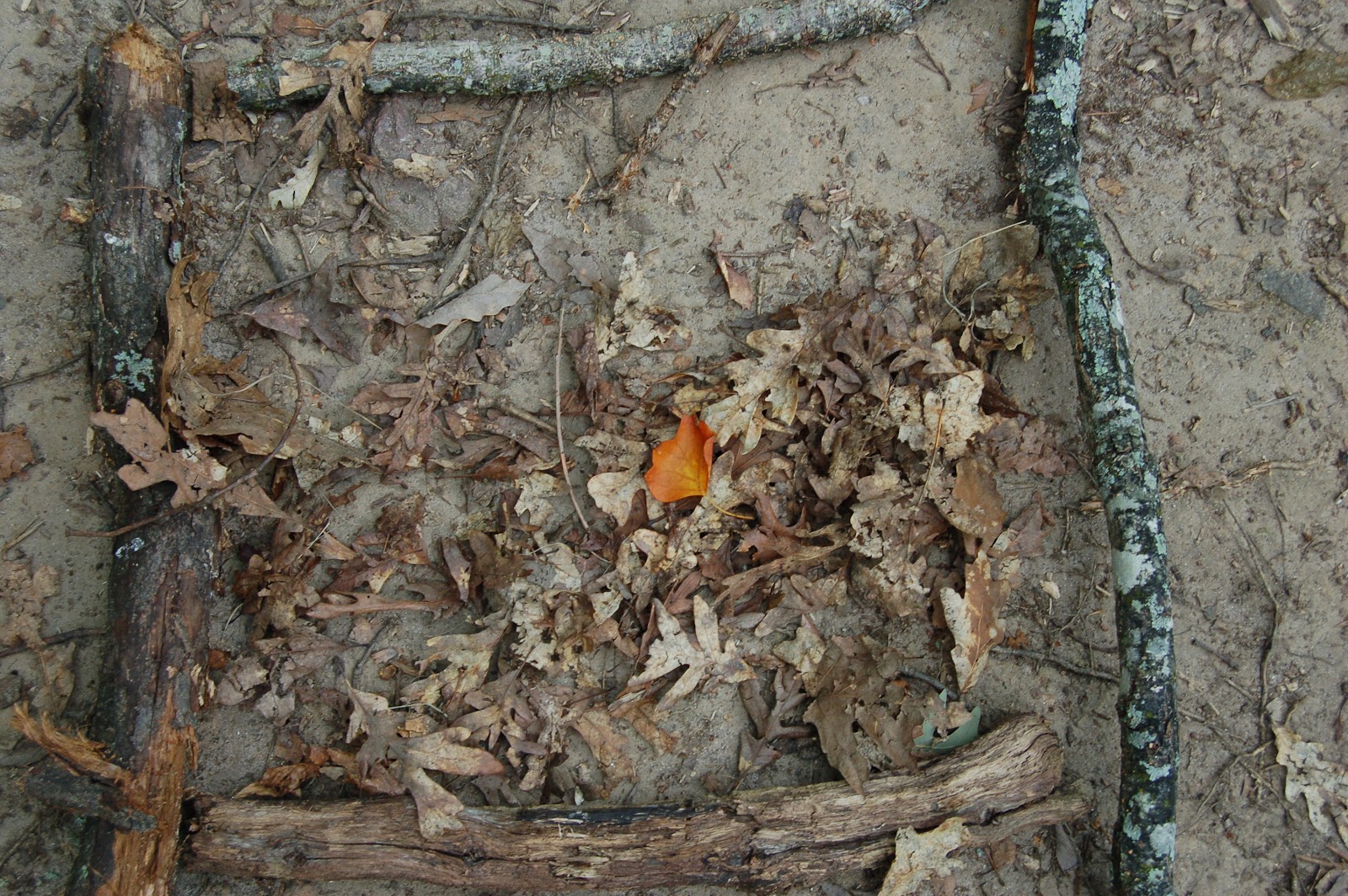
Students from the Boys and Girls Club Teen Center explored Frank Wilson Park with VMNH on July 20th. As part of their week-long Photography theme, they participated in several photo-related nature activities. They acted as photographer and camera to view elements of the park ecology more closely, they reviewed their life science while completing a nature photo scaventer hunt with their cell phones, and they created framed artwork with materials from nature.

Photographers take nature photos with their human cameras

Getting a close-up with their cell phone cameras

They found a conifer!

This tree needed a hug

Frame complete, now for the art

Framed Nature Art

She found a dead butterfly in the leaves, a beautiful swallowtail

Design and Dig!

The MHC After 3 group from Collinsville participated in VMNH led programs the week of July 5 - 8. They learned about plants, gardening, and the importance of community green spaces. For the last two days of the camp, they chose a site for a new garden at Jack Dalton Park (they decided on two small gardens), prepared the sites, chose the flowers, designed the gardens, planted, mulched, and sweat a lot in the heat! Henry County Parks and Recreation assisted with site options and loaned some shovels, and Gateway Streetscapes worked along-side the kids the whole time and also let us use some of their equipment. Next time you're at Jack Dalton park, check out the new garden next to the walking trail.


Breaking Ground

Digging in to remove the grass where the garden would go

Adding a Butterfly Bush

Planting some perrenials

A hard-working group!

The whole group with one of the completed gardens

And a little goofiness

Friday, May 20, 2011

Walk This Way!


Students at the Boys & Girls Club and Fieldale Community Center discovered the world of orienteering with VMNH educators.


First, the students created a compass rose using paper plates. As they designed their compass rose, each student labeled the cardinal directions and assigned an angle to each direction.


Next, using Play-doh to create mountains, students explored and discovered the importance of topographic maps. Creating the mountains helped students draw their own topographic map, which allowed them to understand elevation.


They measured the height of their mountain and divided it into 1 cm increments and placed its sections on a sheet of paper, outlining the perimeter of each section (starting from the top of the mountain to the bottom of the mountain) which allowed them to create their own topographical map.


Lastly, students worked individually or were divided into groups to hide treasure. Putting their orienteering skills to the test, each group was instructed to use bearings, degrees, pace and a compass to find the hidden treasure as well as incorporate prior knowledge and experience based on past lessons from the VMNH educator.

Friday, April 8, 2011

Adventures in Science!


Inquisitive YMCA participants at a local elementary school discovered "Science is for Everyone!" through an After-School Science Plus activity where they were instructed to imagine a scientist and draw that image. The drawings lead to a discussion about common stereotypes assigned to scientists (i.e. bald, wears lab coat, male, works in a lab) and how those stereotypes can discourage others from exploring careers in science.


Next, students followed some of the scientific process skills such as making predictions, testing their ideas, recording data and drawing conclusions to discover which items sink and which items float. After testing each item, participants explored the concept of density.


Friday, February 4, 2011

Art Math

Who knew math could be fun? Participants at the Bassett Community Center investigated art created by M.C. Escher and Piet Mondrian to explore the connection between art and math.


Although he explored different methods of art throughout his career, Escher is most famous for his mathematical designs that showcased tessellations and symmetry. Students discovered that symmetry is not only the mirror image of an object but that symmetry also occurs when the position of an object is changed without changing the shape of the object (i.e. rotational symmetry).


Students compared the artistic styles of Mondrian and Escher and discovered that Mondrian's art is abstract while Escher's art used shapes that are easily recognizable. Also, Mondrian incorporated asymmetry and Neoplasticism (using horizontal and vertical lines and primary colors) into his art.


Friday, December 17, 2010


Participants at the Boys & Girls Club and the Collinsville YMCA discovered the world of Rube Goldberg contraptions. A noted cartoonist, Goldberg created complicated solutions to complete simple tasks. During the first two sessions, students worked in groups to build simple machines using Legos. On the last day, students traded their Legos for everyday materials found around their home to build their very own Goldberg-inspired contraption.


After a brief review of simple machines, students identified simple machines in cartoons.


Next, students built a lever and discovered its three components (fulcrum, effort, and load).


Using the lever, students participated in a Lego flipping contest.


Then students were given the task of building an inclined plane and use accompanying items to get a ball into a cup. This was harder than they thought!


The students were divided into groups and assigned a simple machine to build with common household items or other responsibilities such as figuring out how to connect the simple machines and how to start the chain reaction. After the simple machines were built, all of the machines were combined to form one large contraption.